
Marketing Dive reports that Coca-Cola, Walmart, Levi’s and other brands are using handmade craft, nostalgic storytelling and creators in their 2026 holiday marketing. This is not a single platform update, but a response to advertising sameness and fatigue with AI-generated creative.
This shift is taking place as holiday advertising starts earlier and competition for attention intensifies. The report says holiday ad volume in September 2026 was up 11% from the same month a year earlier, while a Deloitte survey expected average household spending to rise 4%. In that crowded environment, brands such as Coca-Cola, Walmart and Levi’s are using handmade, nostalgic or creator-led storytelling to make advertising feel like something made with time and human involvement, not simply produced faster.
The cases in the report are campaign choices and creative directions; they do not mean every handmade execution is already widely available, nor do they prove that handmade form automatically increases sales. For Taiwanese businesses, the impact extends beyond major consumer brands. Any company relying on seasonal gifting, emotional trust or social sharing should reassess how customers identify the product, understand its use and decide whether to trust the recommendation.

Millennium editorial analysis is that brands should not turn “not AI” into another visual template. If every brand adopts paper cutouts, clay or retro filters, handmade style will quickly become another reproducible advertising formula. The value lies in recognizable evidence connected to the brand promise: how the product is used, why a creator would recommend it, and why the holiday situation feels natural for that product.
Creator quantity should therefore not be judged only by maximum reach. The report notes that several brands are incorporating creators into seasonal messaging, but it does not provide a universal answer on creator scale or performance. Hypothetically, if a Taiwanese food brand made a handmade holiday short video, a stronger approach would be to select a small number of people who can clearly demonstrate storage, sharing or eating occasions while preserving their own voice. This is an analytical example, not a reported case.
Millennium's view:Millennium editorial judgment: Handmade and creator content is worth testing, but it should not become a surface-level anti-AI style. Businesses should prioritize authentic content that proves product use, the source of trust and the next action. The reason is that handmade form can create a distinctive entry point, but it cannot by itself solve product understanding or conversion. As holiday advertising becomes denser and audiences grow tired of generated material, the advantage is not looking the least automated; it is making specific people, situations and product evidence recognizable. This also prevents a one-season visual style from being mistaken for a long-term brand strategy.

When evaluating this direction, Taiwanese businesses should separate three questions: whether the creative has handmade texture, whether the creator is trusted, and whether the content leads people to a feasible next step. All three may coexist, but they can also conflict. A handmade video may attract attention without explaining specifications; a creator may feel authentic without fitting the product; and strong holiday emotion may still leave shoppers unsure where to buy or ask questions.
Businesses should keep the test small: choose one product, one holiday situation and one audience, then compare a handmade version with the existing version around the same core message. Measure understanding, interaction and subsequent action. Hypothetically, if the handmade version generates more saves but no increase in product-page visits or enquiries, the issue may be the information handoff rather than the creative style. If customers can explain the product’s use and complete the next step, the format has a stronger case for longer-term planning.
Suggested action 1:Choose one holiday product and create a handmade and an existing-format version with the same core message for a small comparison with the same audience. Compare three-second view rate, completion rate, saves or shares, and product-page visits under the same campaign period and audience conditions.
Suggested action 2:Select a small number of creators who fit the product use case, requiring personal demonstration and clear product information rather than only seasonal imagery. Track the share of comments correctly identifying product use, link click-through rate and qualified enquiries to assess understanding and intent.
Suggested action 3:Create one path from the video or social post to a product page, trial or enquiry, test one holiday situation first, and adjust information order based on results. Monitor arrival, exit and completion rates at each step, and interview a small audience sample about whether they understand the next action; use drop-off points for optimization.
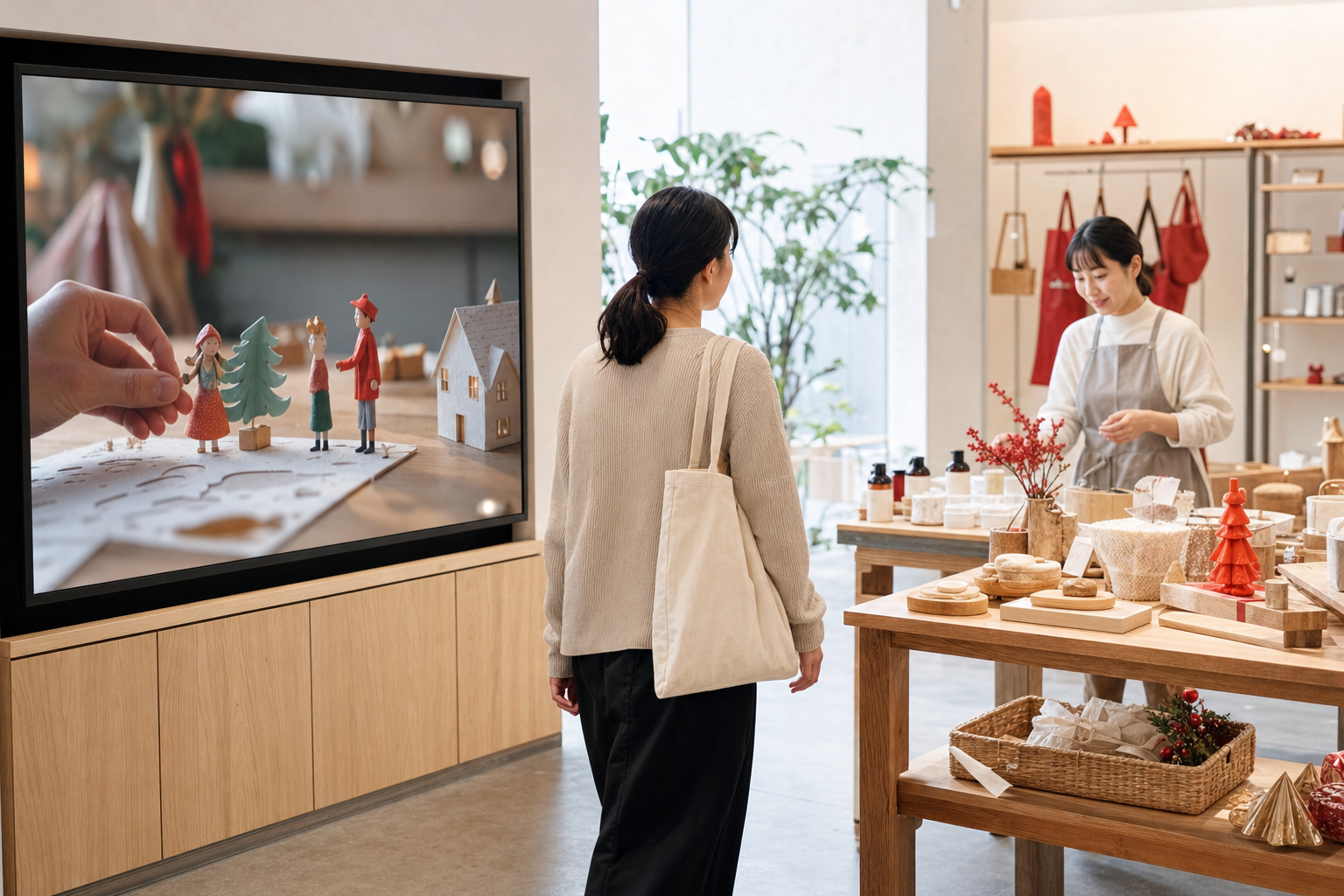
Source:Marketing Dive — Brands turn to handmade craft, handfuls of creators for holiday season(2026-11-25,Taipei time)。Analysis: Millennium Strategy editorial team. Images are AI-created illustrative scenes.
Related reading and services:Influencer and KOL marketing · Creator collaboration and measurement。