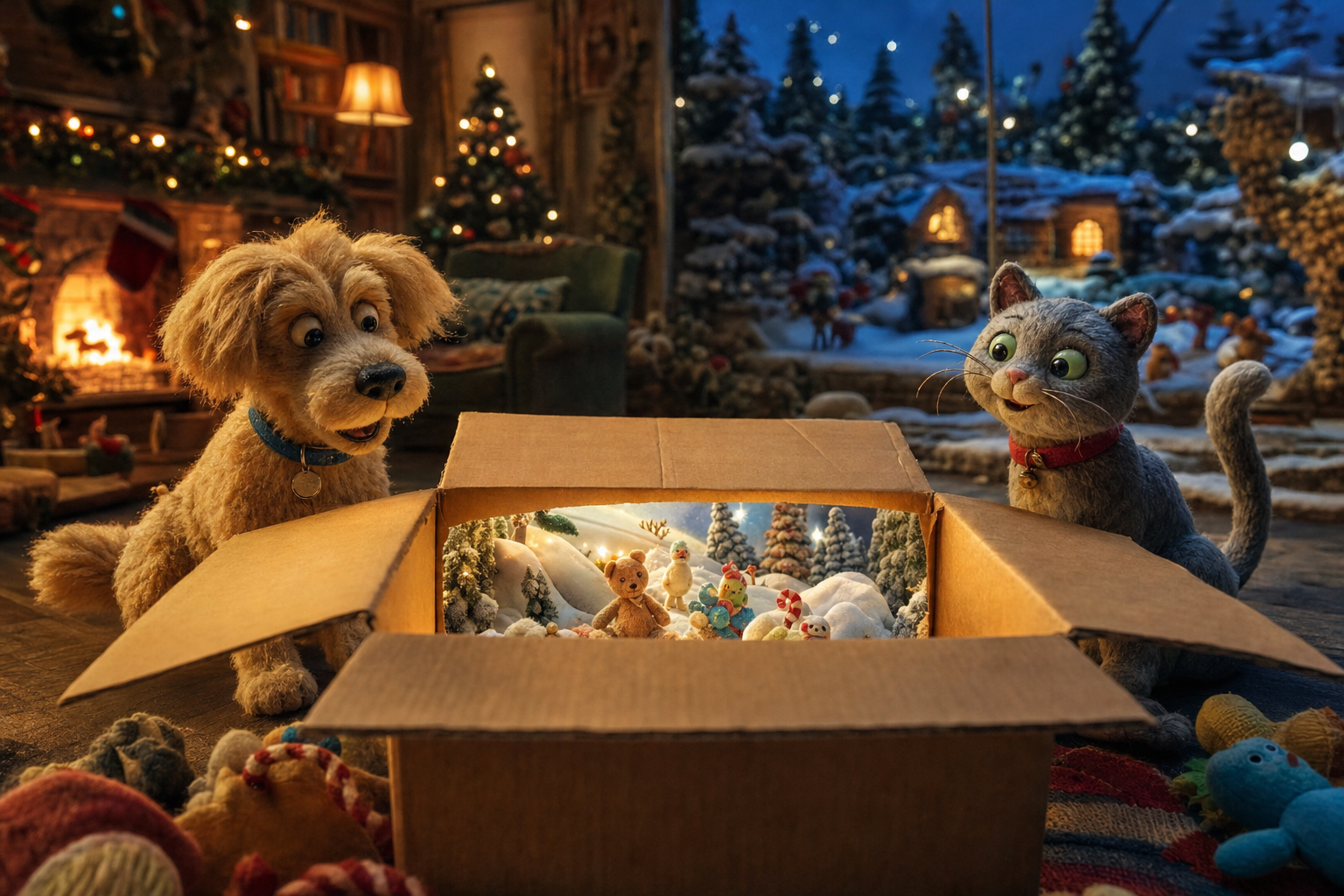
Marketing Dive reports that Chewy’s holiday campaign uses stop-motion animation in a national TV spot for the first time. Pets enter a whimsical world of toys, treats and snow through a Chewy box, while the campaign extends to Chewy Claus letters, creators and pet-adoption activity. These are announced campaign elements, not proof that the same experience is available in every market.
The important change is not simply the format. The brand began with the question of how pets might experience the holidays, then used stop-motion as the storytelling language. The report says the 30-second “A Holiday Dream” and 15-second “A Holiday of Treats” were made with handcrafted animal puppets, and extended beyond television into creator activity and in-person adoption events.
Chewy also brought its long-running Chewy Claus letter initiative into a national TV campaign, saying it would help fund shelter-animal adoptions and send surprises to selected letter writers. For consumers, pet supplies move beyond food or medication into the question of whether pets belong in the holiday ritual. For brands, that makes consistency across content, products and purpose more important.

Millennium editorial analysis finds that Taiwanese companies should not treat stop-motion as the next format to purchase. The report notes that several brands are using stop-motion or mixed animation this year, while Chewy says the puppets in its spots were made by hand and that generative AI was not used. The meaningful distinction is not the claim of avoiding AI by itself; it is the causal fit between the form and the brand idea. A pet’s inner world can credibly be built as a tactile, toy-like world that unfolds frame by frame.
If a business commissions expensive handmade footage simply because audiences are tired of similar generative content, it may gain visual novelty without gaining meaning. Hypothetically, a Taiwanese pet retailer could first interview owners about how they include pets in holidays, then test whether a pet perspective earns more attention or sharing than a product-specification approach. This is a proposed example, not a reported campaign result.
Millennium's view:Millennium editorial judgment: businesses do not need to chase stop-motion; they should ask whether the form proves that the brand understands its consumers. When content, products and action lack one consumer-centered reason, expensive handmade effects become only a short-term novelty. The strength of the Chewy example is the connection among stop-motion, a pet perspective, Chewy Claus and adoption activity. The report does not establish Taiwan availability, sales causality or guaranteed performance. Taiwanese businesses should therefore treat it as a case in integrated proposition and testing design, not as a media-buying instruction.
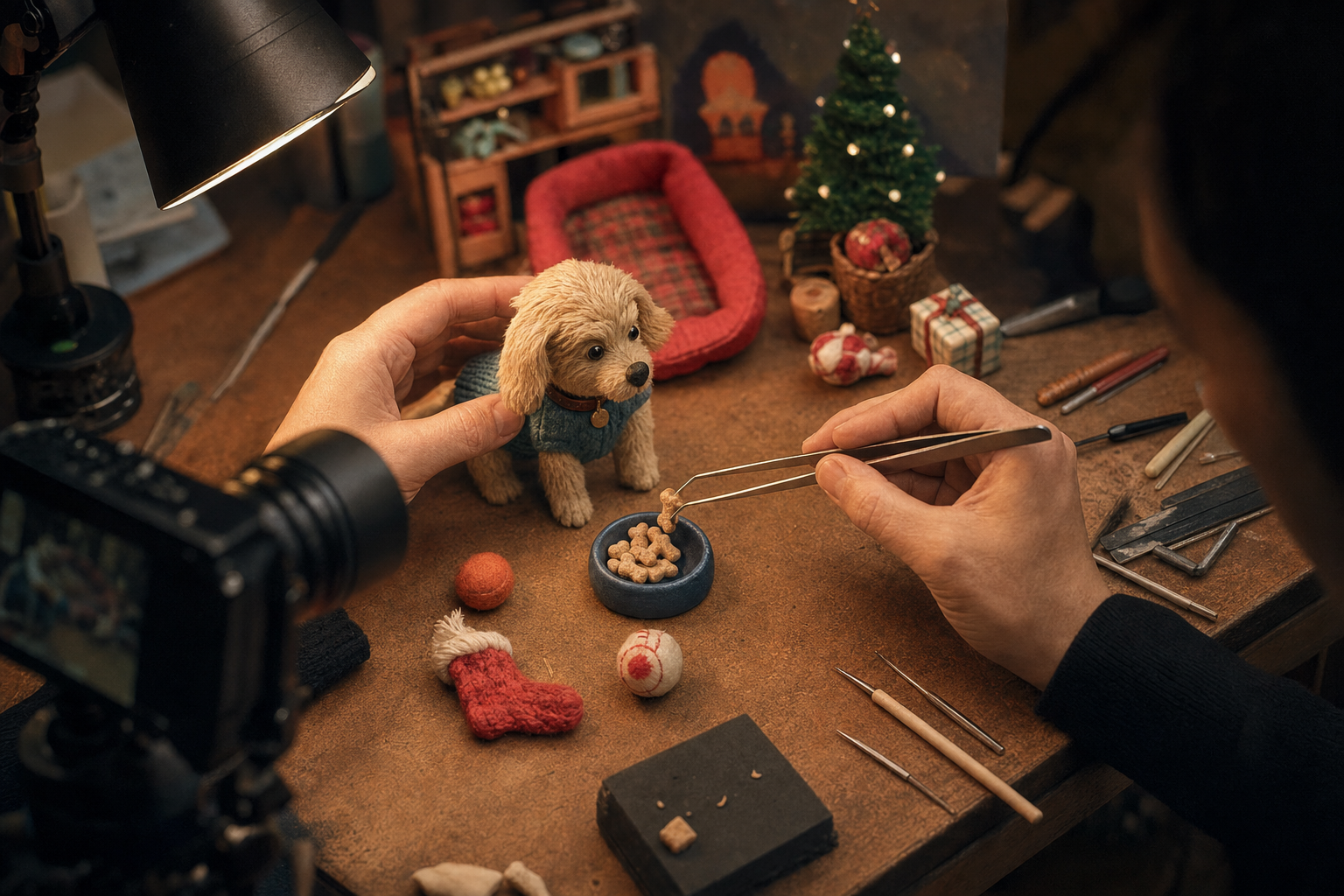
For Taiwanese businesses, the most transferable lesson is that Chewy places its television spot, Chewy Claus letters, social creators and adoption activity under one holiday idea, rather than simply copying an American activation. A company should first confirm that its purpose or community action can genuinely continue the emotion in the content, then choose stop-motion, live action, illustration or another medium. The report establishes Chewy’s combination; it does not prove that these elements guarantee sales growth.
Hypothetically, a pet brand could break a holiday test into four steps: noticing the pet situation, understanding the product use, taking part, and completing a purchase or adoption-information inquiry. Each step should be observed separately instead of relying only on video views. Creator partnerships can be assessed through concrete questions in comments, while events can be assessed through follow-up actions. This helps determine whether handmade production is a useful storytelling investment or merely seasonal decoration.
Suggested action 1:Use interviews or social surveys to learn how consumers describe pets’ holiday needs before deciding whether a pet perspective or handmade animation is warranted. Complete one round of needs research and classify responses into three to five recurring situations; measure completion through classification coverage and retained verbatim responses.
Suggested action 2:Break the holiday content path into viewing, product understanding, interaction and follow-up inquiry, with a separate tracking link or field record for each step. Compare reach and completion rates at each step and produce a test record; do not judge success from views alone.
Suggested action 3:When creators or in-person events extend the brand story, test a small version first by observing questions, product inquiries and follow-up actions before scaling production. During a defined period, record substantive comments, inquiries, registrations or adoption-information clicks, and report them separately from content reach.

Source:Marketing Dive — Chewy jumps on stop-motion animation trend lighting up holiday ads(2026-11-24,Taipei time)。Analysis: Millennium Strategy editorial team. Images are AI-created illustrative scenes.
Related reading and services:Influencer and KOL marketing · Creator collaboration and measurement。