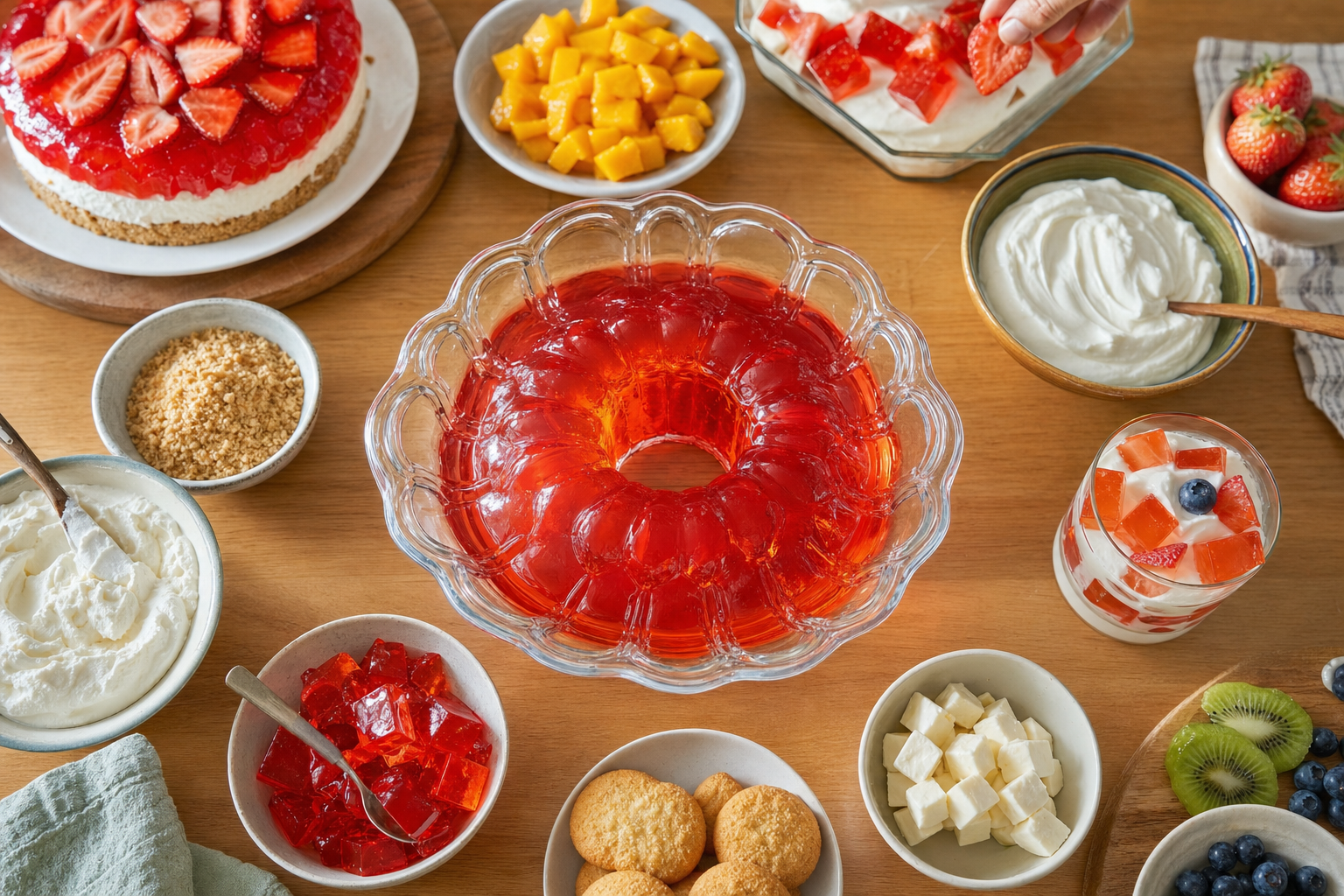
Kraft Heinz’s Jell-O has launched the “Oh Hello, Jell-O” creative platform, drawing on home-cooking inspiration involving boxed cake mixes, cookies, yogurt and tiramisu to present the product as more than traditional gelatin or pudding. It is the brand’s largest marketing investment in more than a decade and includes its first CTV buy. However, the announcement does not establish availability in every market or prove any sales outcome.
Created by Johannes Leonardo, the platform is the agency’s first campaign for Jell-O. Two 15-second spots begin with home cooks in monochrome kitchens and use a social-inspired flip transition to reveal others reacting to the finished desserts. The brand has also created an original electronic-pop track for “Oh Hello, Jell-O,” designed to extend into social, content and future campaign moments.
The report says the campaign will run across streaming, online video, social and digital, with investment pulsing around seasonal moments in 2027. Jell-O also plans a Las Vegas Sphere activation featuring a gelatin mold, a dirt-cup dessert and banana cream pudding. For businesses, the important shift is from “what the product is” to “when consumers remember and use it.”
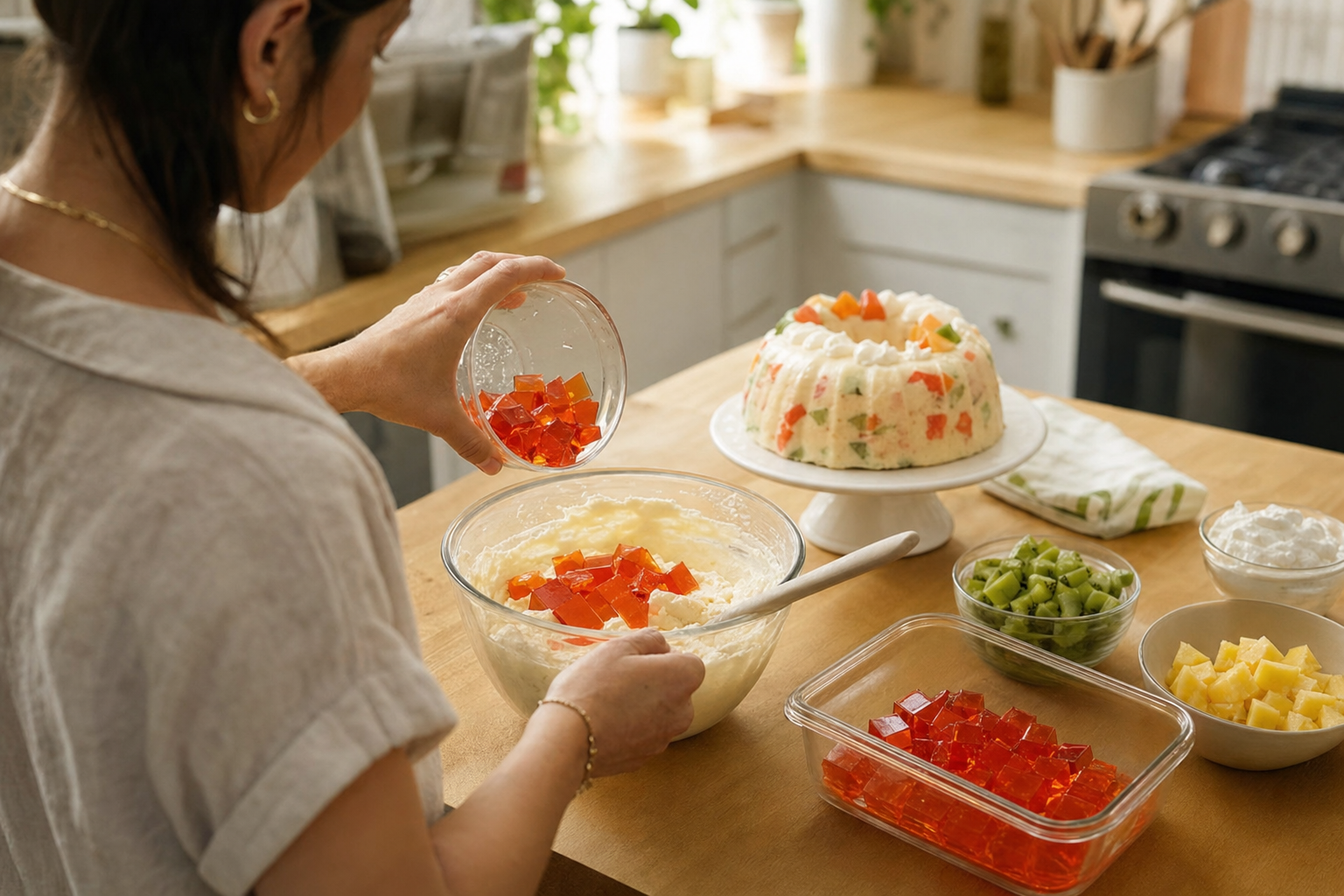
Millennium Global Marketing’s editorial analysis finds the most instructive gap here is not high-attention media, but the distance between high familiarity and low purchase salience. Jell-O has long-term memory structures, yet it needs concrete recipes to give consumers a reason for the next use. If the strategy remains only a matter of color, music and large-scale exposure, it may create recall without changing the shopping list.
Taiwanese businesses should therefore break a platform into three layers: demonstrate one understandable alternative use in short video, let creators or consumers add variations, and then provide immediately usable information near the product page, store or package. Hypothetically, a food brand known mainly for holiday use could test a “weekday quick pairing,” but it would first need to verify whether people understand it, save it and later search for the product.
The value of original audio is not simply popularity. It is whether the sound becomes a recognizable cue across video and social content. Smaller brands do not need to copy the Sphere or a large CTV buy. A more practical approach is to establish a repeatable sound, gesture or recipe transition, then observe whether it improves recognition of both the brand and its use case.
Millennium's view:Millennium Global Marketing’s editorial judgment is that the most transferable lesson is turning repositioning into a use case that can be demonstrated, saved and purchased again—not the scale of the Sphere or CTV investment itself. The reason is that familiar brands often suffer not from a lack of awareness, but from failing to come to mind at the moment of need. Turning social observations into concrete recipes, then connecting them to product information and seasonal moments, tests whether a new association enters the buying path. Taiwanese businesses should validate comprehension, adoption and recall before scaling media.
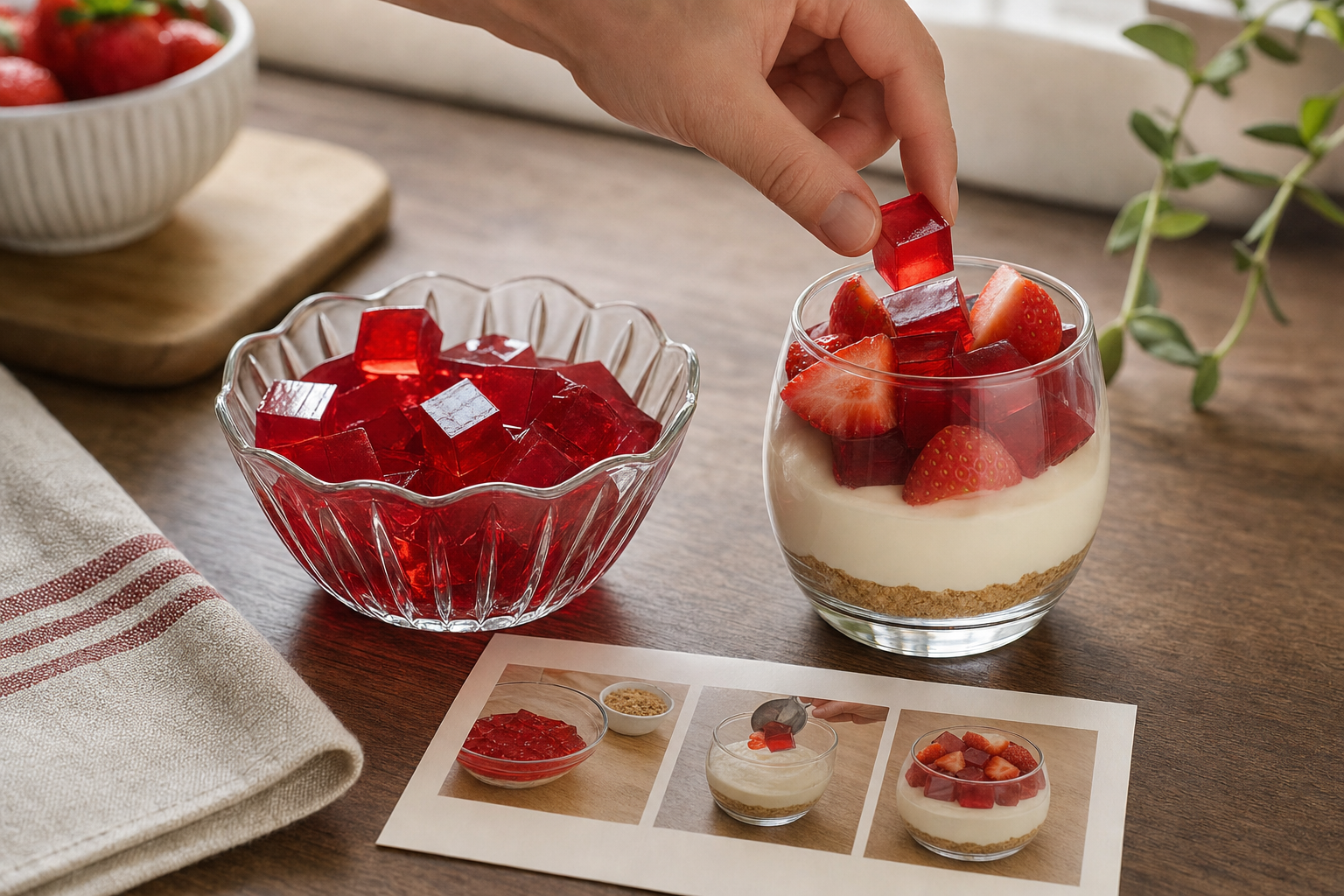
Jell-O’s integrated plan spans streaming, online video, social, digital and e-commerce touchpoints. This reminds businesses not to ask only whether a video looks good, but whether viewers can take the next step: save a recipe, review product information, add an item to cart or find the ingredients in a store. The correct step depends on the category; exposure should not be treated as conversion by default.
The first proposed action is a “new-use content test”: choose one context that fits the product but differs from its existing image, create two or three short versions, and observe three-second comprehension, completion and save-or-share behavior. The second is to connect high-response content to product information and examine clicks and exit points. The third is to repeat the test around seasonal moments to see whether the new association returns at different times.
These are proposed validation steps, not evidence of Jell-O’s results in Taiwan and not a guarantee of sales. For Taiwanese brands, the more disciplined sequence is to confirm whether consumers will adopt a new use before scaling media. That is how a creative platform can become an accumulating purchase reason rather than one burst of attention.
Suggested action 1:Choose one product-supported use case that differs from the existing brand image, create two or three short-video versions, and run a small content test first. Compare three-second comprehension, completion, saves or shares across versions, recording differences for the same audience and period.
Suggested action 2:Connect the better-performing content to a product page, recipe page or store information and design a clear path from content to product. Track content click-through, product-page arrival, exit points and add-to-cart rate rather than treating impressions alone as performance.
Suggested action 3:Repeat the same core use case around one seasonal consumption moment while adapting the context and creative, testing whether the new association returns. Compare branded searches, content revisits, recipe saves and return visits to the product page between the initial exposure and seasonal repeat.
Source:Marketing Dive — How Jell-O’s new creative platform looks to shift consumer perceptions(2026-11-23,Taipei time)。Analysis: Millennium Strategy editorial team. Images are AI-created illustrative scenes.
Related reading and services:Facebook page management · Social content and inquiry guide。