
Snapchat is testing an updated Snap Creator Network that lets brands describe a need by audience, category, or campaign goal, then explore creator performance, shortlist and message creators, and potentially boost organic content. Snap Map is also adding Visited By markers linking places to relevant creator posts. The shift suggests that creator partnerships may become a connected path from discovery to physical locations, rather than a one-post purchase.
The update has three parts: the refreshed Snap Creator Network has entered open beta testing; Snap Map is adding Visited By markers that show places filmed by creators followed by a user and link to related posts; and Snapchat has expanded its Creator Agency Partner Program. Snapchat says the first feature uses artificial intelligence to help match creators based on a brand’s description. That is an announcement about a feature and its testing status, not proof that it is available in every market or that it will produce better results for every brand.
The immediate impact is that the unit of evaluation may shift from “who has reach” to “who fits the audience, content category, and campaign goal.” Visited By also places stores in the geographic context of creator content. Hypothetically, if a Taiwanese lifestyle shop worked with a creator, the key question would not simply be whether it received a marker, but whether viewers could understand the product, identify the location, and know what to do next. That path still requires validation by each business.

Millennium editorial analysis finds that the most important aspect is not artificial-intelligence matching itself, but the way Snapchat places creator search, screening, outreach, and content promotion in one workflow. If a tool reduces the time spent finding people without improving how a brand defines the creator’s role, audience context, or rights, the business may simply make vague partnership decisions faster.
Taiwanese businesses should therefore establish comparable criteria first: Can the creator explain the product? Do they reach the intended audience? Is the content suitable for organic publishing before promotion? How will later actions such as store visits or inquiries be identified? Hypothetically, two creators may have similar reach while one is better at detailed demonstrations and the other at location discovery. Neither is universally better; the choice should follow the campaign objective rather than treating a platform recommendation as the answer. Snapchat says its agency partner program is operating in the U.S., U.K., and Middle East and North Africa, so Taiwanese businesses should not infer that identical support exists locally.
Millennium's view:Millennium editorial judgment: Snapchat’s update deserves consideration in creator-partnership planning, but it should not be treated as an automated performance guarantee. The real investment is in comparable partnership criteria and measurement from content to location. The reason is that the update touches creator discovery, content promotion, and location exposure, which may shorten the partnership process. Matching cannot replace brand judgment about audience fit, content credibility, usage rights, and downstream behavior. Snapchat specifically identifies the agency partner program as operating in the U.S., U.K., and Middle East and North Africa, so Taiwanese businesses should verify their own access and tracking capability before scaling.
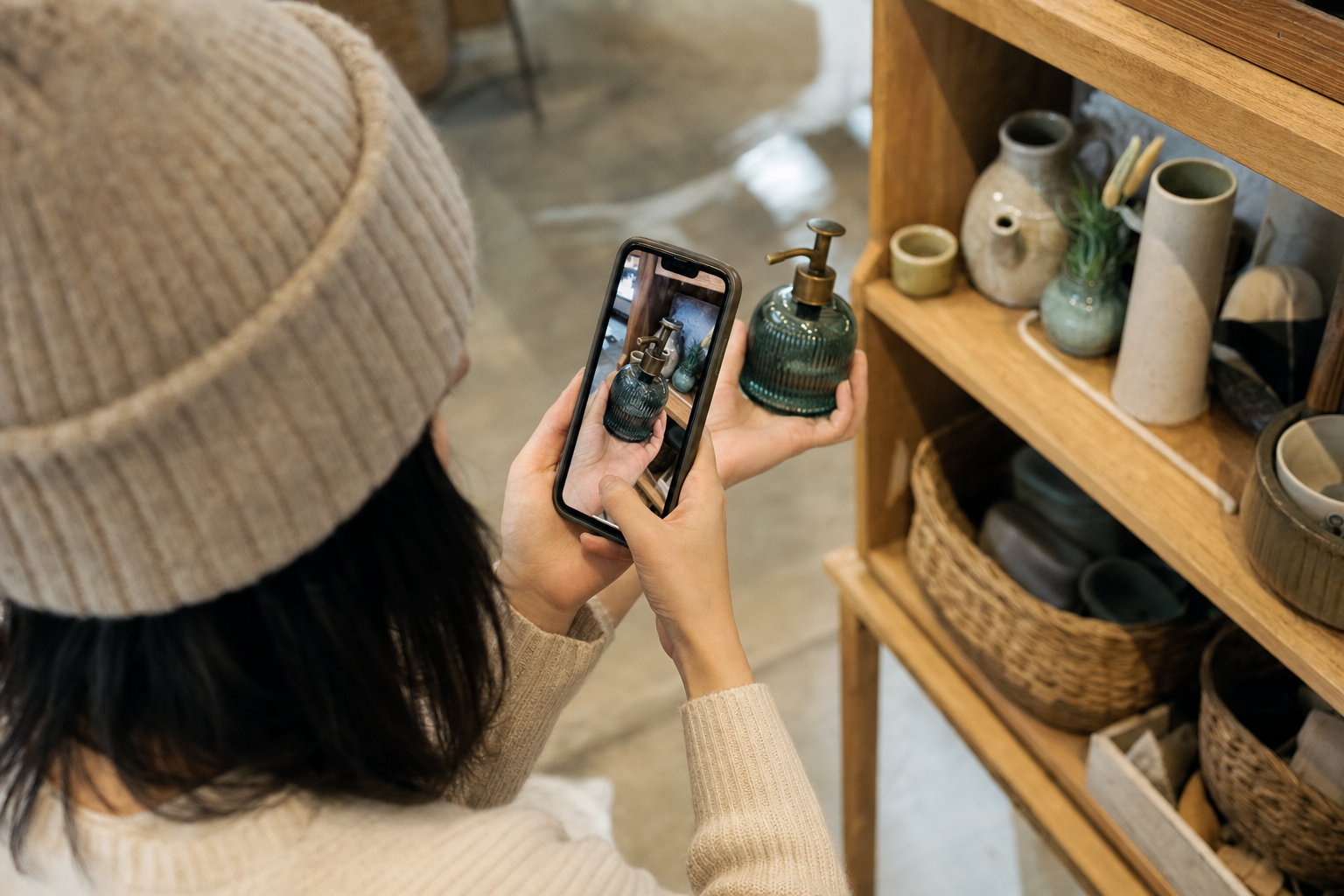
First, turn the campaign need into checkable conditions instead of writing only “find a suitable creator”: define the audience, the product question to solve, and whether the desired next step is viewing, inquiry, or a store visit. Second, build a shortlist and record the content theme, audience fit, usage rights, and trackable next step for each candidate. These are proposed processes; they do not mean the platform necessarily provides every field, and they are not a promise of results.
Third, run a small path test. Hypothetically, a restaurant or retailer could invite a limited number of creators to make location-related content, then observe completion at stages such as understanding the post, finding the location, and asking or visiting. Interview people who drop off to learn where the friction occurs. If views are acceptable but viewers cannot identify the store, the issue may be information design rather than creator reach. If visitors cannot explain how they found the store, attribution needs improvement. Expansion should follow these observable signals, not the mere arrival of a new feature.
Suggested action 1:Rewrite the campaign brief as three to five checkable conditions, and record audience fit, content role, and usage rights for every shortlisted creator. Produce one shortlist with the same fields for every candidate, and ensure the team can explain why each candidate was retained or rejected.
Suggested action 2:Design a small content-to-location test that records understanding, location finding, inquiry, or visit as separate stages instead of using total exposure as the only metric. At the end of the test period, produce completion records for each stage and conduct at least one round of interviews with people who did not complete the path.
Suggested action 3:Before committing, verify feature access, regional availability, content promotion and rights processes, and assign one person to own source and behavior attribution. Keep a verifiable feature-and-rights checklist, and make every inquiry or visit record traceable to the content, creator, or another source.

Source:Social Media Today — Snapchat adds more creator partnership opportunities(2026-11-18,Taipei time)。Analysis: Millennium Strategy editorial team. Images are AI-created illustrative scenes.
Related reading and services:Influencer and KOL marketing · Creator collaboration and measurement。