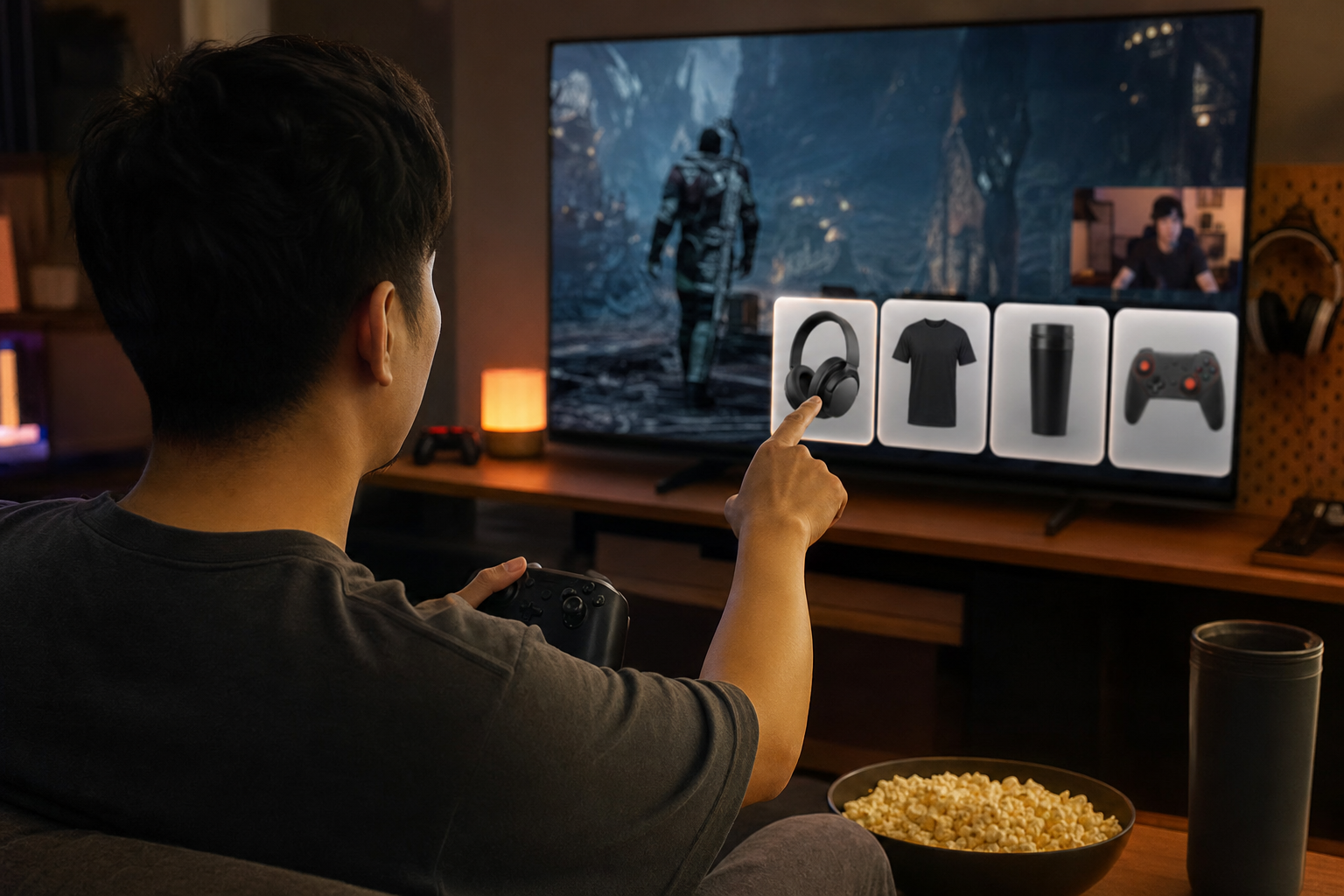
Around TwitchCon, Twitch announced two ad formats: its desktop shoppable in-stream ads are in open beta in the U.S. and Canada, while skippable ads are planned for open beta in December. This is not evidence that full advertising access is already available in Taiwan; it is a sign that livestream media is moving closer to connecting viewing with action.
According to Marketing Dive, Twitch’s shoppable ads appear as an interactive overlay on video ads, allowing viewers to add featured products to an Amazon cart, browse styles and buy directly. Its skippable format is being introduced through an open beta, with advertisers charged only when a viewer watches beyond 30 seconds, completes a shorter ad or clicks. The first shortens the path from message to transaction; the second makes continued attention part of the performance logic.
The change affects more than gaming brands. Products that require demonstration, comparison or live interaction may reconsider the role of livestream media. Taiwanese companies should not treat a desktop beta in the U.S. and Canada as local availability, however. The report says expansion to Europe, the Middle East and North Africa, and Asia Pacific is planned later, with other device versions also planned; regional access, device coverage, product eligibility and account conditions still need verification.
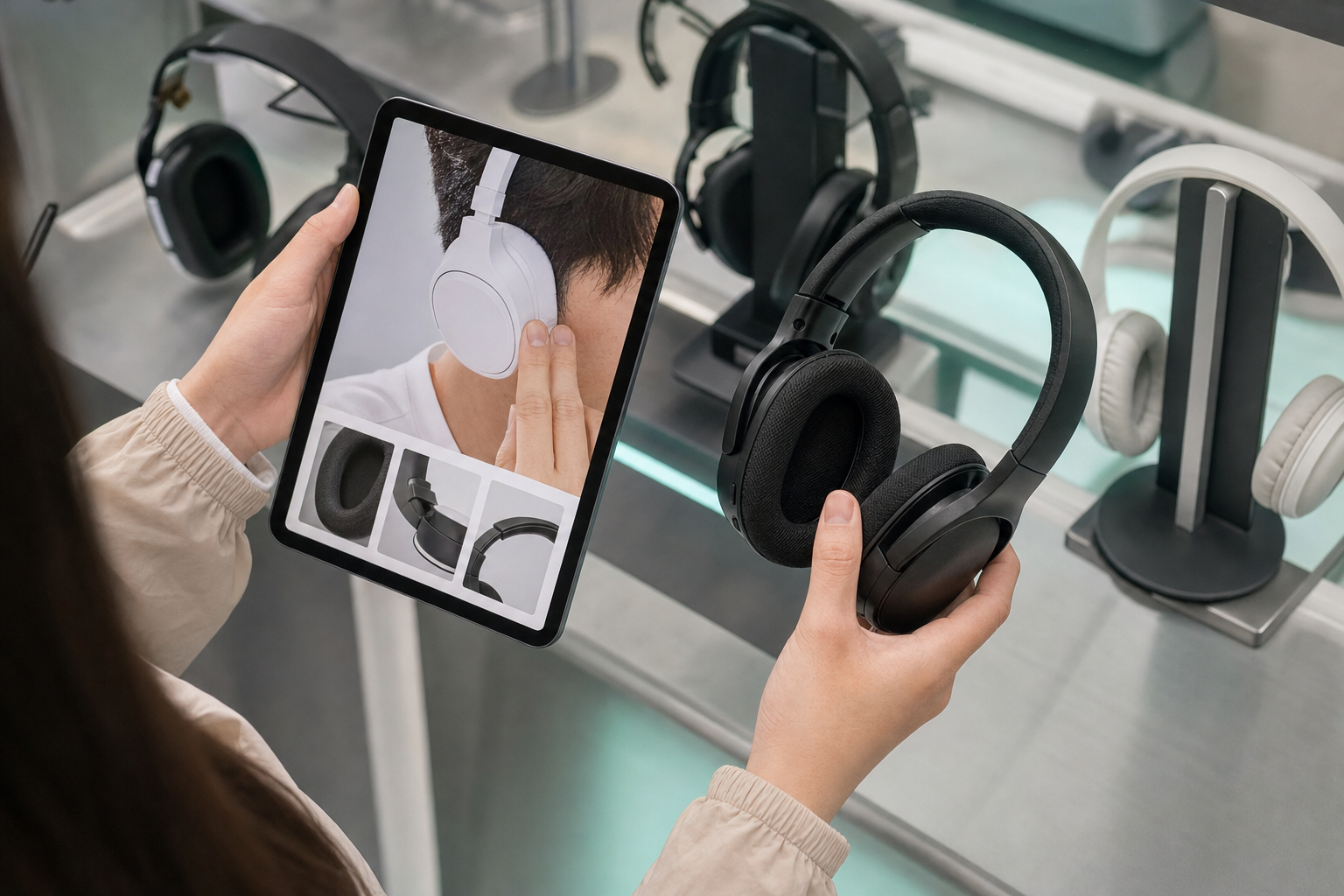
Millennium’s editorial judgment is that the significance of this update is not simply another ad placement. Twitch is trying to put livestream companionship, chat interaction and measurable action on one path. Brands therefore should not merely move an existing short-video cut into a livestream environment; trust is built through context, while a shopping action needs a clear product reason and a low-friction handoff.
The platform and research figures cited in the report show Twitch’s effort to be seen as a full-funnel medium, but businesses should not infer their own sales results from platform-level viewing or ad-visibility figures. Hypothetically, a Taiwanese keyboard brand could start with one product that is easy to demonstrate and define four observable points: viewing, comparison, cart addition and inquiry. If viewers watch but leave in large numbers, the issue may be product explanation or content continuity rather than media cost alone.
Millennium's view:Millennium editorial analysis judges that Twitch’s new formats are worth testing, but for now they should be treated as tools for validating the handoff, not as a reason for Taiwanese brands to immediately increase budgets. The reason is that shoppable and skippable formats solve only part of the media interaction. Product eligibility, the ability of content to retain attention, reliable cross-border fulfillment and reconciled conversion data remain the brand’s responsibility. Testing one product and a small path to locate drop-off is more reliable than forecasting results from platform-wide viewing or another brand’s case.

For Taiwanese companies, the first question is not whether to buy Twitch inventory, but whether the product already has stable information, inventory and after-sales support in an eligible commerce environment. If the shoppable format depends on an existing Amazon listing, the brand should verify cross-border product availability, pricing, delivery, returns and customer service before inviting more demand. Otherwise, advertising may simply amplify disappointment.
The second question is to use skippability as an attention test, not as a promise of cheap growth. A company can create different opening reasons for the same product and observe when viewers skip, when they stay and whether staying leads to a meaningful action. Hypothetically, if completion is healthy but inquiries are scarce, the next iteration should first fix the message or product page. Expansion into creator or cross-market media should wait until the path is explainable and tracking can be reconciled.
Suggested action 1:Create a commerce-handoff checklist covering the product page, inventory, pricing, delivery, returns and support before media activation. Record tester completion and errors or interruptions at each step; complete at least three end-to-end rehearsals from the ad entry point to support or checkout before launch.
Suggested action 2:Produce two or three livestream openings for the same product, separately tagging viewing, skips, product browsing and cart additions in a controlled pilot. For each version, compare time-to-skip, product-browse rate and cart-add rate under the same product and test period.
Suggested action 3:Define one handoff process across creator content, ad creative and product pages, then reconcile media events with actual orders or qualified inquiries weekly. Maintain a weekly reconciliation log covering missing events, unattributed orders and qualified-inquiry rates, with a defined next revision for each anomaly.
Source:Marketing Dive — Twitch debuts shoppable, skippable ads as TwitchCon feels growing pains(2026-11-13,Taipei time)。Analysis: Millennium Strategy editorial team. Images are AI-created illustrative scenes.
Related reading and services:Influencer and KOL marketing · Creator collaboration and measurement。