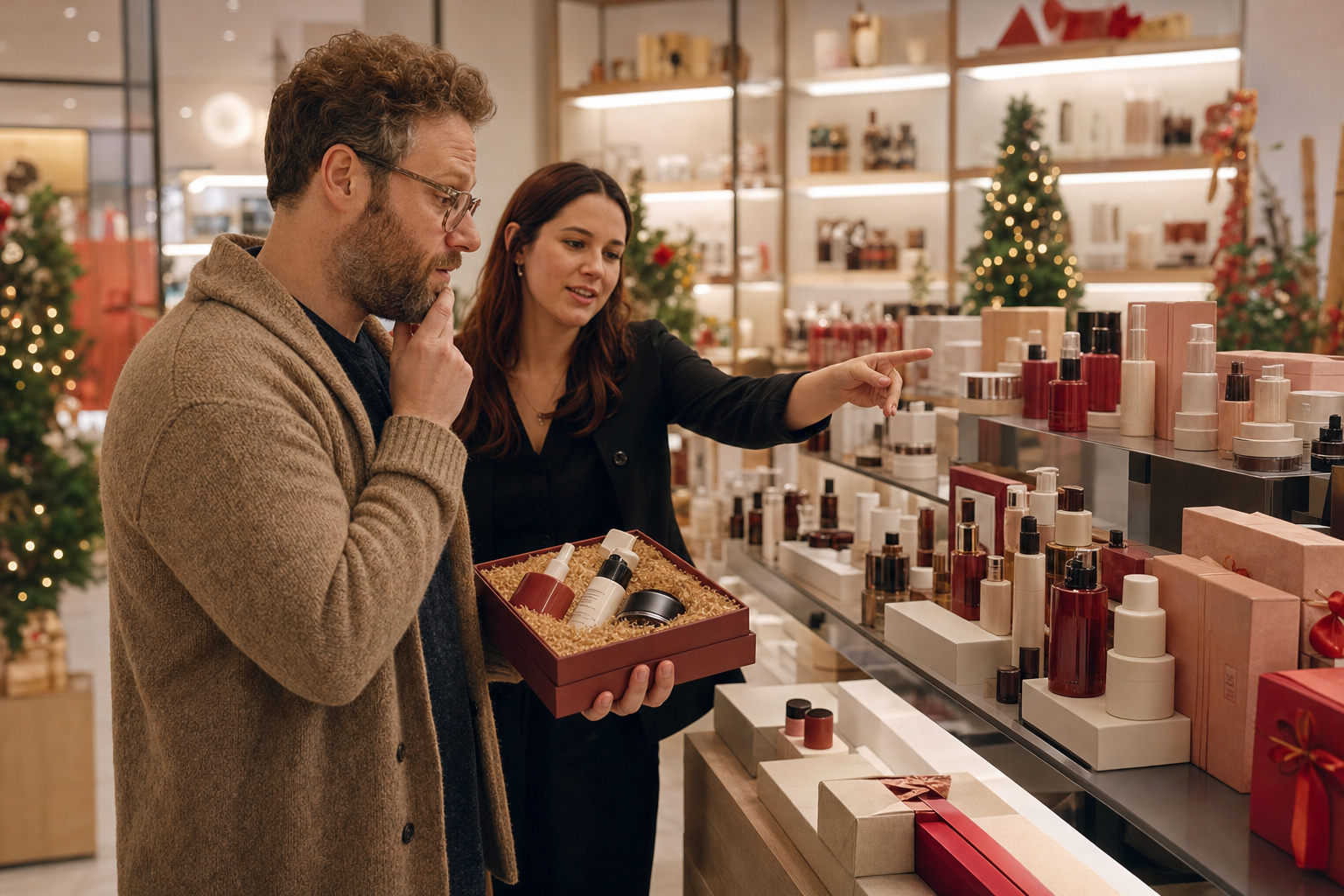
Sephora’s latest holiday campaign does not put experienced beauty shoppers at the center. It targets people who want to give thoughtful presents but lack beauty knowledge. Seth Rogen seeks help from an in-store advisor, while the campaign runs across television, streaming and social media; a Los Angeles store was also temporarily presented as “Sethphora” as a teaser. The useful lesson for Taiwanese businesses is not celebrity visibility alone, but how a brand can acknowledge uncertainty and design an easier path to purchase.
According to the report from Marketing Dive, Sephora’s “We All Sephora” holiday campaign is designed for people who lack beauty knowledge but still want to choose suitable gifts for friends and family. In the 30- and 60-second ads, Seth Rogen consults an in-store advisor about his shopping list and misunderstands products such as setting spray and pimple patches. The advisor helps him choose gifts for different recipients. The campaign is planned for connected and linear TV, streaming and social, while the website and app offer a product list curated by Rogen.
This changes the starting point of the communication. Instead of saying, “You already understand the category, so come browse,” it says, “You can begin even if you are uncertain.” For gift-givers, the barrier may not be price or product range, but fear of choosing badly, confusion about usage or difficulty translating a recipient’s needs into a product. Sephora turns that awkwardness into recognizable comedy and places advisor support and an online list on the same path.
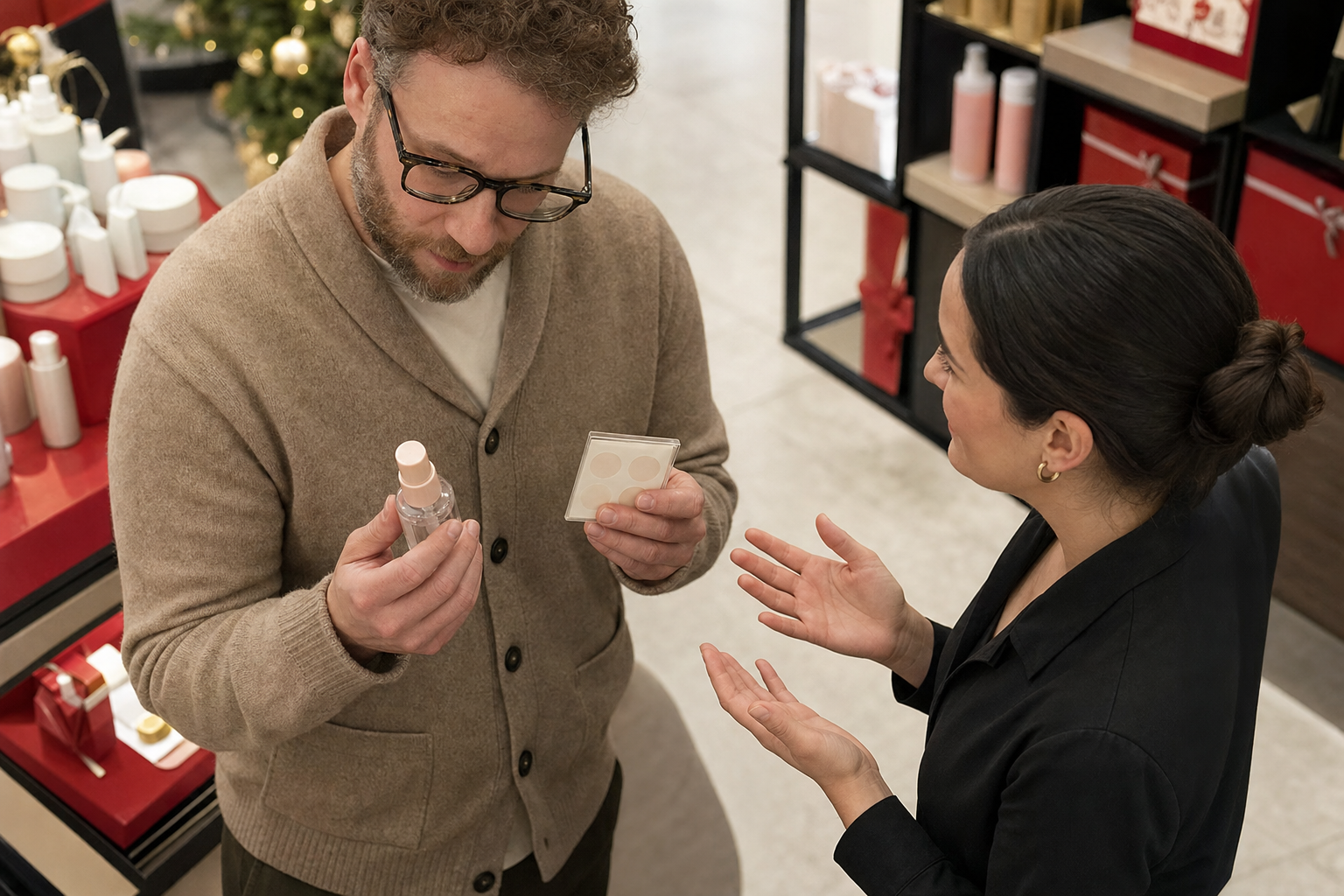
Millennium editorial analysis finds that the most transferable lesson is not hiring a celebrity with comedic recognition, but treating the novice as a consumer to be served and understood. Seth Rogen provides familiarity and an entry point; the actual conversion still depends on whether advisors can break vague needs into answerable questions and whether the online list lets viewers continue after leaving the content. A celebrity can amplify attention, but cannot automatically repair gaps among product information, categorization and service.
Hypothetically, if a Taiwanese skincare brand promoted holiday gifts with a celebrity simply saying, “This works well,” beginners might still not know who it suits, how to use it or how it differs from alternatives. A stronger approach would let the character ask an uncomfortable but realistic question, such as, “What if the recipient does not usually use skincare?” and answer it with a short usage scenario, recipient need and reason for choosing. This is a hypothetical example, not a reported Taiwanese case.
Businesses should therefore evaluate creative work by asking not only whether it can generate discussion, but whether it makes the next step easier. If content, product pages, store staff and customer service use different language, humor stops at exposure. If they respond to the same anxiety, the creative idea can become an interface that lowers decision cost.
Millennium's view:Millennium editorial analysis: the transferable core of Sephora’s campaign is not the celebrity or store stunt, but turning a novice’s purchase anxiety into a customer path shared by content, advisors and a product list. The reason is that a celebrity can reduce distance at first contact, but cannot by itself answer “Who is this for, how is it used and why choose it?” If a brand lets the character ask questions real beginners would ask, then answers them consistently in the video, product page and service setting, the holiday idea has a chance to move from exposure to testable purchase assistance. This is Millennium editorial analysis, not a claim made by the news source.

Taiwanese retailers and brands in beauty, food, appliances and lifestyle goods may face the same problem: gift-givers have intent but not enough confidence. Companies can first identify three common barriers, such as not knowing who to buy for, not understanding the use or worrying about choosing incorrectly. They can then decide whether character storytelling, advisor answers, a product list or an interactive quiz should carry the customer forward. This does not mean every brand needs a celebrity, nor that Sephora’s cross-media plan can be copied directly in Taiwan. The transferable idea is designing for unfamiliarity.
The first proposed action is to map “gift question—product reason—next step” and use the same language on product pages and in store scripts. The second is to ask a small audience to find a product after viewing content and observe where they stop, rather than recording views alone. The third is to compare guided and unguided selection situations and test whether service actually reduces questions. These are proposed actions and measurement methods, not evidence of client results, contracts or revenue promises.
If testers keep asking about the same usage, the problem may be product information rather than media investment. If the content is remembered but viewers do not reach the product page, the call to action or landing page may need review. This question-led diagnosis is more useful than simply copying a celebrity, a temporary store rename or holiday visuals when deciding whether the next investment should be creative, information architecture or service training.
Suggested action 1:Rewrite holiday product content into a four-part map of recipient, need question, product reason and next step, using the same key language in video, product pages and store scripts. Audit consistency across at least three touchpoints and record the share of testers who reach the product page or request help after understanding the product.
Suggested action 2:Test a small-audience piece built around novice questions and ask viewers to complete an actual gift-finding task after watching, rather than comparing views alone. Record task completion from viewing to finding a qualifying product, stopping points and repeated questions to distinguish content friction from information friction.
Suggested action 3:Compare advisor-guided and self-service selection situations to test whether service truly reduces gift-giver uncertainty rather than merely increasing contacts. Compare the number of questions per selection, time needed to make a choice and the share leaving without a decision in the two situations.

Source:Marketing Dive — Sephora casts Seth Rogen for holiday ads targeted at gift-givers(2026-10-28,Taipei time)。Analysis: Millennium Strategy editorial team. Images are AI-created illustrative scenes.
Related reading and services:Advertising management · Advertising strategy and measurement。