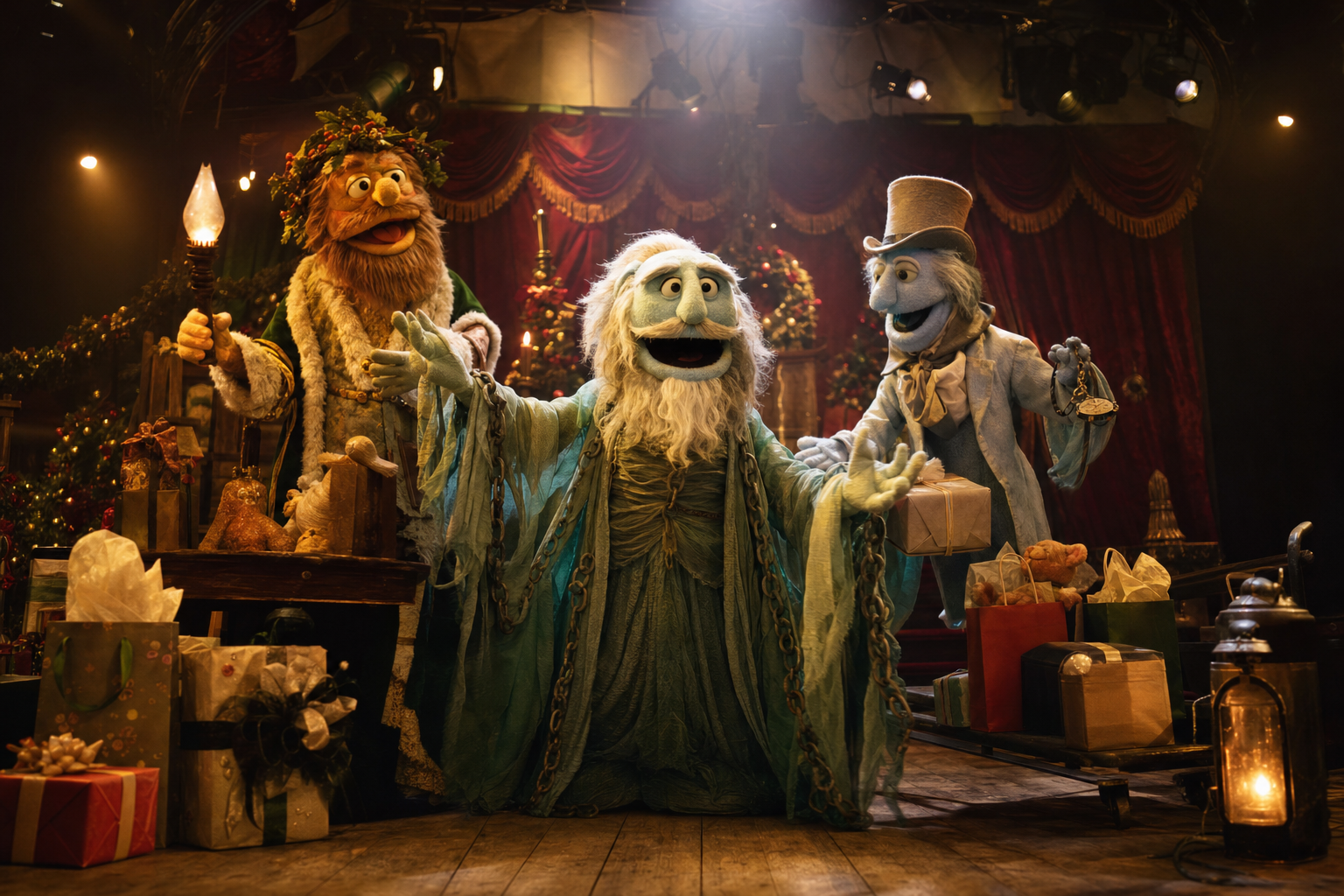
Walmart has launched “A Who Knew Carol,” a holiday campaign built around The Muppet Christmas Carol. Walton Goggins plays Scrooge, while three ghosts introduce gift ideas, Black Friday and Cyber Monday savings, and last-minute gifting through Express Delivery. It is not simply a celebrity or character collaboration; it consolidates the retailer’s fourth-quarter messaging around one idea of reappraising the brand.
According to the report, Walmart previously separated holiday activity around moments such as Black Friday. This time, “Who Knew?” runs across the fourth quarter and extends into television, streaming, social, out-of-home, audio, podcasts, creator networks and NFL integrations. Spanish-language content and additional social videos are also planned, showing that one theme does not mean one long film; it means placing multiple channels inside one narrative framework.
The three ghosts are particularly instructive. They do not merely add characters; they address different holiday questions: What can I give, when can I find a better deal, and can I still deliver a gift on time if I prepared late? For businesses, this links brand memory with product information. The report describes the campaign and media plan, however, not a proven sales or conversion outcome.

Millennium editorial analysis finds that the most valuable part of Walmart’s case is not the Muppets or the celebrity alone. It is the use of an evolving “reappraisal” plot to keep brand perception, product reasons and purchase timing aligned. Familiar cultural material lowers the barrier to attention, while the characters’ missions carry product and service information. This can reduce the cost of understanding compared with rebuilding a different brand language at every seasonal moment.
The method is not something every business should copy literally. A large retailer can use long-form video, social, creators, out-of-home and sports content at once. If a small or mid-sized brand copies only the surface of an IP, it may generate views without a clear product handoff. Hypothetically, a Taiwanese food brand could use “rediscovering the holiday table” as its theme, but it would still need distinct, testable product entry points for gifting, gatherings and emergency replenishment rather than only producing an attractive story.
Millennium’s judgment is therefore that Taiwanese businesses should copy the structure of “one central idea plus multiple task moments,” not the characters, settings or media scale. The central idea must remain recognizable across assets, while each task moment should answer what the consumer should see, compare or buy next.
Millennium's view:Millennium editorial analysis judges that Taiwanese businesses should borrow “one recognizable holiday idea connected to multiple consumer task moments,” rather than directly copying the Muppets, celebrities or a large media buy. The reason is that Walmart places familiar cultural storytelling, brand reappraisal and product questions across the gifting cycle on one narrative line, allowing different media to handle attention, understanding or action. Copying an IP alone may increase memorability without a product handoff. Defining the consumer question, product evidence and action entry for each moment first allows a business to inspect path continuity through completion, product-page visits and inquiry rates. This is Millennium’s independent editorial analysis, not a claim from the news source, and it does not represent a result in the Taiwan market.

Businesses should first identify whether they need brand repositioning, seasonal demand capture or immediate service explanation. Walmart places all three under one platform, but Taiwanese businesses do not need to take on the same complexity at once. Hypothetically, a fashion brand seeking more gifting demand could keep one holiday theme and produce separate assets for “why this choice,” “why this budget” and “when it arrives,” then observe whether people move from content to a product page or store. This is a proposed hypothetical test, not a reported result from this campaign.
Media integration also needs naming and asset rules; putting videos, posts and creator content on one calendar is not enough. A brand can define one consumer question, one piece of product evidence and one action entry for each moment, then observe completion, product-page visits and clicks or inquiries by moment. These measures help compare assets and paths; they do not automatically equal revenue or long-term brand change.
Finally, creators should be designed as explainers, not only reach sources. If one theme must serve different ages, languages or buying situations, businesses should check whether creators can translate the common idea into credible use cases while preserving product accuracy. Holiday advertising is not only a contest over the biggest story; it is a test of whether consumers know what to choose next after understanding the story.
Suggested action 1:Build a holiday content-path map: choose one central idea, divide it into gifting, price and timing or service moments, and assign one product entry to each. This is a proposed planning action. After launch, record completion, product-page visits and click-through from content to entry for each moment, then compare the three moments.
Suggested action 2:Create two product-handoff versions under the same central idea, such as one led by use context and one led by delivery or purchase timing; label it as a hypothetical test rather than treating creative preference as a performance conclusion. Under comparable media conditions, compare qualified-view rates, product-information interactions and inquiry rates to identify which handoff better drives the next step.
Suggested action 3:Give creators a task brief requiring each piece to explain the shared idea, use context and accurate product information, then validate audience understanding with a small content batch first. Use the types of product questions in comments, time on the information page after referral and qualified inquiry rate to check whether creator content clarifies the next action.

Source:Marketing Dive — Walmart CMO breaks down retailer’s Muppet-fueled holiday campaign(2026-10-26,Taipei time)。Analysis: Millennium Strategy editorial team. Images are AI-created illustrative scenes.
Related reading and services:Influencer and KOL marketing · Creator collaboration and measurement。