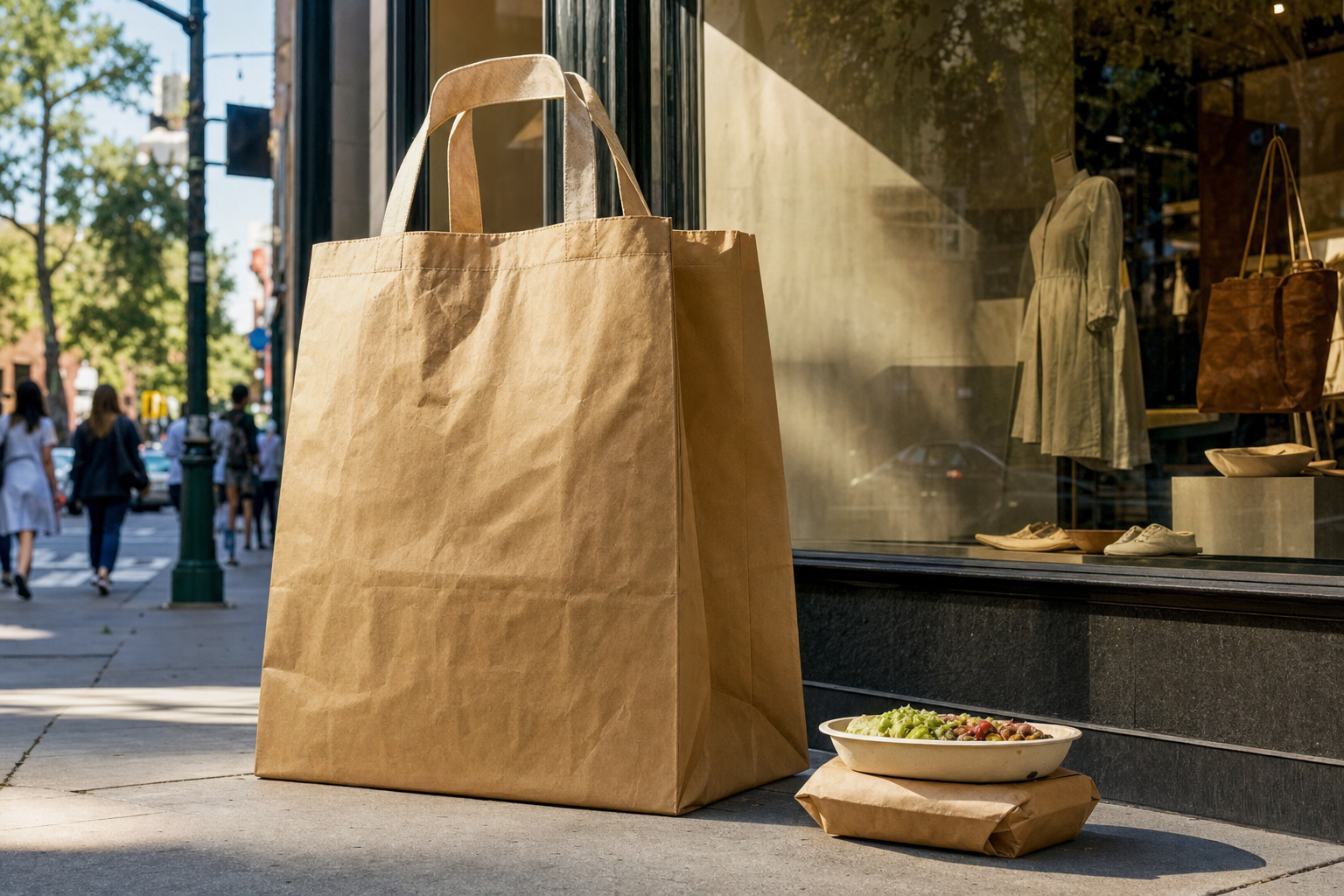
Recently, Chipotle introduced a limited oversized takeout bag, while Unreal Snacks collaborated with designer Rachel Comey on the Coco Bag, inspired by the brand’s chocolate packaging and shown during New York Fashion Week. These examples translate familiar food containers, tastes and values into fashion objects that can be worn, collected and shared.
The common move in these examples is not simply printing a logo on clothing, but redesigning objects consumers already recognize. Unreal’s Coco Bag uses a silver Tyvek exterior to echo chocolate packaging, with interior pockets for products; Chipotle’s oversized takeout bag connects with a digital-exclusive family-meal promotion. The former enters a new cultural setting through a designer and Fashion Week, while the latter invites existing members into the activity.
The impact has two layers. First, a food brand appears in cultural spaces where snacks or restaurants may not normally be discussed. Second, brand memory becomes something consumers can display as personal style. For Taiwanese businesses, the question is not “Should we also make a bag?” but which recognizable product element can be naturally re-used in the audience’s everyday life.
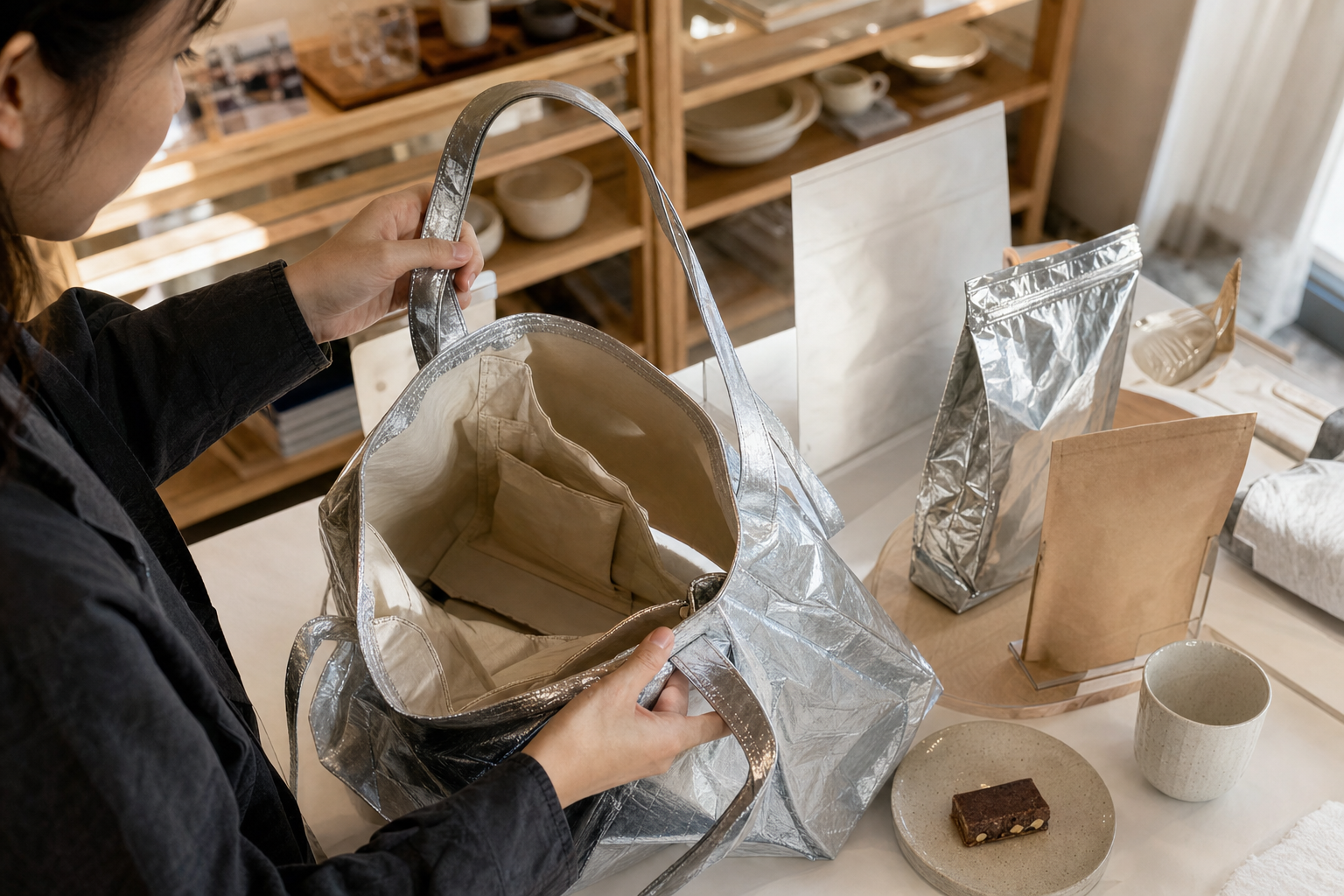
Millennium editorial analysis finds this wave of food-and-fashion collaborations noteworthy, but businesses should not mistake limited availability, a high price or oversized scale for the strategy itself. Unreal uses a designer’s work to carry forward packaging texture and an audience’s sense of taste; Chipotle turns a familiar takeout bag into a participation symbol for a member activity. Both begin with recognizable brand assets and then choose a setting that amplifies them.
Suppose a Taiwanese tea-drink brand wanted an apparel collaboration. Simply moving a cup graphic onto a tote might generate short-term sharing without adding meaning. A more logical approach would ask how the audience carries, collects or gives tea, then use design collaboration to translate the drinking ritual into an everyday object. This is a hypothetical example, not a reported case.
Businesses should therefore treat a collaboration as a brand-translation test: do taste, material, place-of-origin stories or service habits remain recognizable when moved into a new medium? If the audience needs extensive explanation, the attention may belong only to the partner rather than becoming shared brand equity.
Millennium's view:Millennium editorial analysis: The key to a food brand entering fashion is not making the object more extravagant, but giving existing brand assets a credible new reason to be used and expressed in everyday life. These cases suggest that takeout bags and chocolate packaging become topics because they already carry brand memory before entering new settings such as design, Fashion Week or member interaction. If Taiwanese businesses copy only the bag format, attention may be brief. If they test whether brand assets, audience life and follow-up actions connect, the collaboration can become a learnable brand experiment rather than a one-off exposure.
For Taiwanese businesses considering a similar program, the first checkpoint is the audience’s life context, not the fame of a potential partner. Clarify whether the object is meant for collecting, use, gifting or social display; each purpose affects quantity, price, channel and content. The reported cases involve food brands, designers, fashion settings and member activities, so they cannot be assumed to produce the same response in Taiwan.
The second checkpoint is connecting attention to observable brand actions. After the collaboration content is released, do people voluntarily view product information, join an activity, provide consented preference data or return to a brand channel later? These are not guarantees of success, but they help distinguish one-off exposure from a relationship that can be extended.
Start with a small prototype or content test rather than immediately funding a full limited-edition product. In a hypothetical example, a dessert brand could show three household-item concepts derived from signature packaging, compare audience understanding, intended use and product inquiries, and then decide whether to pursue a formal collaboration. The concepts must be clearly labeled as hypothetical, not presented as market results.
Suggested action 1:Create a brand-asset translation audit: list three to five recognizable tastes, materials, containers or service rituals, build an everyday-use context for each, and ask the target audience whether the original brand remains recognizable. This is a proposed research action, not evidence of a collaboration result. Measure the share of participants who correctly connect a concept to the original brand, time required for understanding and the number of spontaneous associations, then compare concepts.
Suggested action 2:Run a small content or prototype test across collecting, using and gifting scenarios, keeping product information and consent-based tracking consistent to see which scenario best leads people to the next step. Compare product-information view rate, activity participation, the share of compliant preference data collected and return visits across versions; do not treat one metric as a sales guarantee.
Suggested action 3:Set a scaling threshold for the collaboration: before full production or wider media spending, require the concept to pass brand recognition, a credible use case and a follow-up channel across marketing, product and customer-service reviews. Record whether each criterion passes, then track qualified inquiries, return visits and customer-service question types during a predefined post-test period as the basis for scaling.
Source:Marketing Dive — Brand new bag: Chipotle, Unreal Snacks reach for fashion relevancy(2026-10-13,Taipei time)。Analysis: Millennium Strategy editorial team. Images are AI-created illustrative scenes.
Related reading and services:Brand content marketing · Brand positioning and marketing。